Writing is respite from our regular performances.
I’ve, worked as a journalist for seven newspapers and a radio station. After my husband went to seminary, I earned a PhD and became a cultural anthropologist. Both of my career choices reflect my love for people’s stories and my interest in human differences and human justice.
Most of my career I’ve written serious, nonfiction. But lately I’ve been writing lighter, playful fiction. That comes from needing time to escape from our conflicted world.
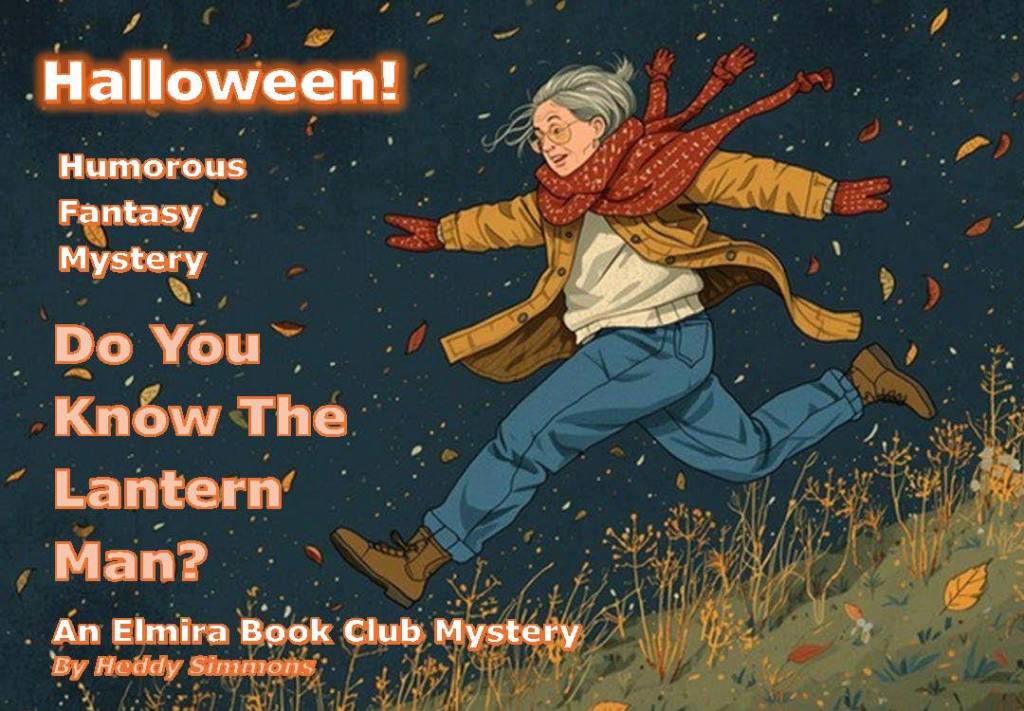
I love a good cozy mystery. My first two were published just a few months ago titled Relative-ly Dead: A Family Tree Mystery and Do You Know the Lantern Man?: An Elmira Book Club Mystery. Both stories are about this part of Washington State and feature precocious-women-protagonists, humor, history, and a bit of small-town magic. Though these two cozies are about everyday life and friendship, they also include justice themes.
In my work as an anthropologist, I have lately been concerned about words, especially metaphors used to dehumanize people. I know that most groups dehumanize other groups when they believe they themselves are being judged and humiliated. Some groups dehumanize because they believe their way of being is the only correct way. The members of these groups tend to be very kind to people who are like them but highly judgmental of people who differ from them.
When we call people horrible names or see them as “other”, the parts of our brains that influence empathy and love actually shut down. When that happens, we no longer see the ‘other’ as fully human. And we can be vulnerable to people who use metaphors that degrade people as outsiders.
Dehumanization is a theme in both my stories. In Relative-ly Dead, members of the unhoused population are the outsiders.
In this mystery, Genealogist Betts Harvey prides herself on helping families find missing relatives or ancestors. When a client asks her to find an heir for a centuries-old book of herbal recipes and seeds, the outcome is a brutal case of lights out in a cold alley. Someone wants the book badly enough to kill two unhoused campers for it.
Determined to protect the heirloom and herself, Betts works to expose the murderer with the help of Warren, her retired firefighter boyfriend, and Philly, coffee-break buddy and local mud-run champion.
In the meantime, city hall is catering to out-of-town developers, who want the land occupied by the town’s homeless community. Trouble doubles when police apprehend one of Betts’s unhoused friends and bring Betts in for questioning.
A precocious goat and a showboat lawyer come between Betts and an arrest, but the real hero is an unhoused friend who rescues Betts and Philly from an assailant during a nighttime, sneak-and-snoop expedition to find evidence. Can Betts protect her friends from a murderer, one who has her name at the top of a killer to-do list?
In the book Do You Know the Lantern Man, acts of dehumanization are illustrated through witchcraft accusations. Witchcraft accusations in Western culture are usually about scaring women and men into following group rules, especially during times when there is economic and social stress. Witchcraft accusations and conspiracy theories are about social control.
In my story, a shifty pastor tries to scare and castigate three book club friends. This is a story for readers who appreciate dark tension balanced with the support of strong friendships.
In short, the cozy is about The Reading Club of Retired and Capable Ladies, who learn from their September book that acquiring new skills keeps their brains younger. They agree to learn the art of practicing magic, and their naïve attempts set loose energies that ricochet through their lives like negative ions after a lightning strike. The results lead to police allegations over a poisoned, comatose, and kidnapped man, the accidental release of a specter from a book, and the unwanted attention of misogynist conjurors belonging to the Guild of the Supreme Brotherhood of Manroots. How can Kitsy, Fayette and Sheila solve the mystery of the kidnapping before the police arrest them, deal with a paranormal creature from the seventeenth century, and confront the destructive forces of the Manroots?
Why write a cozy mystery that involves magic?
Anthropologists study everything to do with human culture and that includes people’s understanding of spirituality and the mystical. Religion is found in almost every culture and so are beliefs about magic and witchcraft. Of course, I am curious about what religions have in common, such as important and key moral expectations about compassion. I’m also curious about beliefs in magic and witchcraft and how different they can be from group-to-group.
Magic is not the same thing the-world-around. From a North American viewpoint, there can be a fine line between prayer and magic.
Prayer is about beseeching and asking and requesting.
Magic is about manipulating or coercing the supernatural.
When we pray, we often have to ask ourselves if we are requesting God’s will or are we trying to influence something to happen the way we want it to, which would be magical thinking.
As I have learned over the years, most of us participate in magical thinking unconsciously, whether we realize it or not. We are human after all.
As a writer, I wanted to play with some of those concepts in my cozy mystery, which is, in the end, a typical good-triumphs-over-evil story.
And I love it when the-social-justice-side wins.

 heddysimmons